Welcome to the Mathematical World!
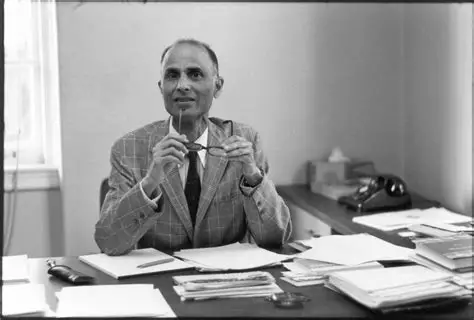
Harish-Chandra
Pioneer of Representation Theory and Lie Groups (1923 – 1983)
Early Life and Education
Harish-Chandra was born on October 11, 1923, in Kanpur, India. He showed an early aptitude for
mathematics
and
physics, earning a Bachelor’s degree in Physics from Allahabad University in 1940.
He later moved to the University of Cambridge, where he earned a degree in mathematics, and then pursued
advanced
studies at the University of Chicago, obtaining his PhD in physics under guidance that
combined both mathematics and theoretical physics.
Contributions
Harish-Chandra is renowned for his profound contributions to representation theory, particularly the
study
of Lie
groups and Lie algebras.
His work bridged the gap between abstract algebra, harmonic analysis, and quantum physics.
- Developed the Harish-Chandra isomorphism, a fundamental result in representation theory.
- Formulated the Plancherel formula for semisimple Lie groups, central to harmonic analysis.
- Laid the foundations for understanding infinite-dimensional representations of classical groups, impacting both mathematics and theoretical physics.
Selected Mathematical Concept
One of his key results is the Harish-Chandra homomorphism, which relates invariant differential
operators on
a Lie algebra
g to symmetric polynomials on a Cartan subalgebra h:
Zg ≅ ShW
where Zg is the center of the universal enveloping algebra of g, Sh is the symmetric algebra of h, and W is the Weyl group.
Legacy
Harish-Chandra’s work laid the foundation for modern representation theory and influenced fields ranging
from
quantum mechanics to number theory.
He received numerous accolades, including the Cole Prize in Algebra and recognition from the National
Academy of
Sciences.
He was also a Fellow of the Royal Society and received the Padma Bhushan in 1977.
In 1981, Yale University awarded him an honorary degree.
The mathematics department of V.S.S.D. College, Kanpur, celebrates his birthday annually with lectures and visits to the Harish-Chandra Research Institute, an institution in India named in his honor. Robert Langlands, in a biographical article, wrote: “He was considered for the Fields Medal in 1958, but a forceful member of the selection committee in whose eyes Thom was a Bourbakist was determined not to have two. So Harish-Chandra, whom he also placed on the Bourbaki camp, was set aside.”

All rights reserved by the Mathematical Unity
Contact: +8801400044645
Email: mathematicalhorse1453@gmail.com
Our Discord Server: Mathematical Unity [Ulus Riyadiyat]